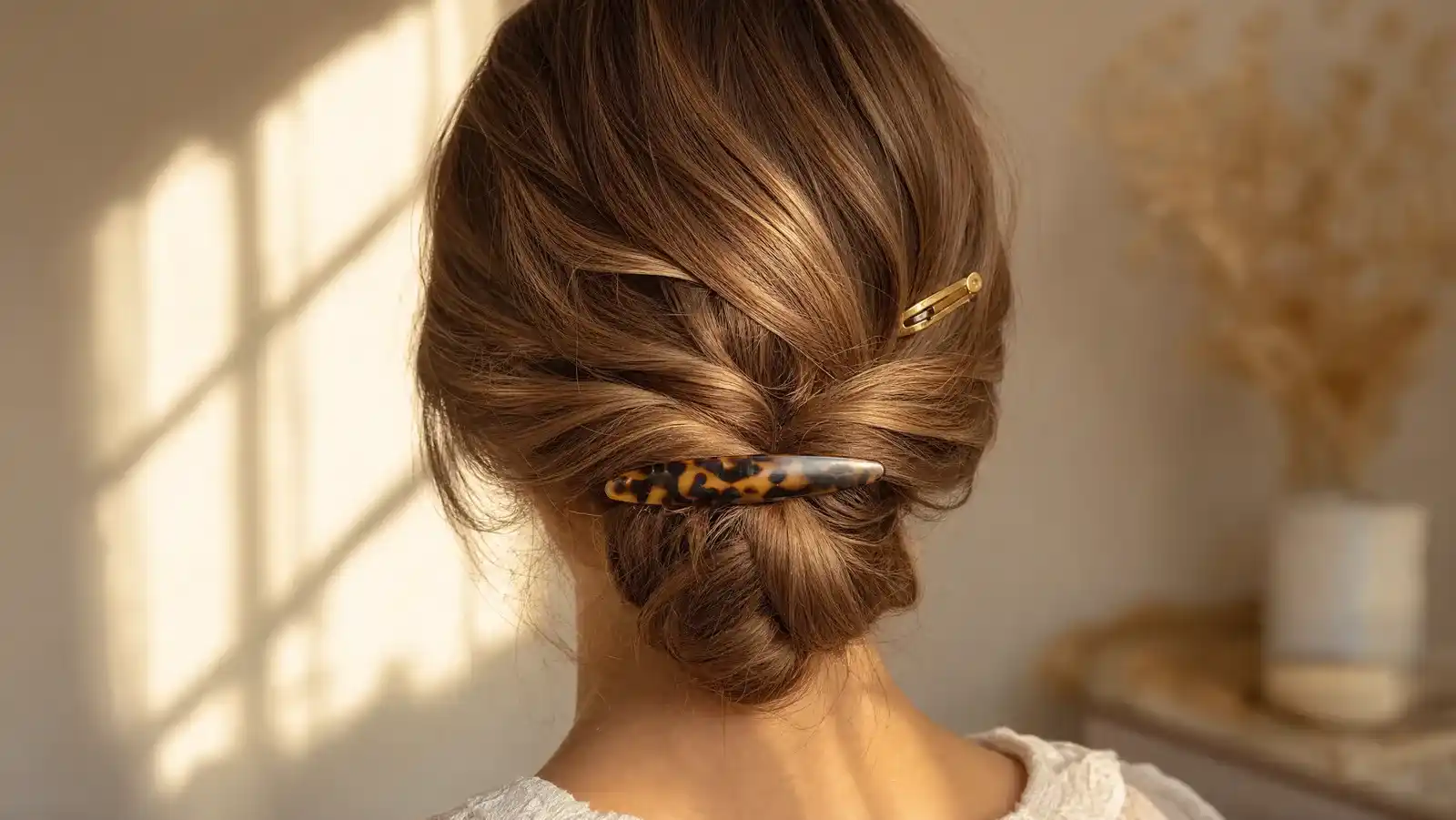
- What you need for these barrette hairstyles
- 1. The 30-second office half-up
- 2. The side sweep for second-day hair
- 3. Double barrettes along the part
- 4. The French twist barrette updo
- 5. The no-elastic low chignon
- 6. Symmetrical face-framers
- 7. The tucked bob
- 8. The dressed-up ponytail
- 9. The braided accent
- 10. The slicked-back statement
- How to make easy barrette hairstyles stay put
- Which barrette hairstyle should you try first?
Every easy barrette hairstyle comes down to the same three moves: section the hair cleanly, twist or sweep it into position, and clip the barrette flat against your head. The 10 looks below are variations on that motion — a 30-second office half-up, a French twist barrette updo for weddings, a slicked-back statement for dinner — each with short steps, the right barrette, and the one mistake to skip.
Best Claw Clips is reader-supported. When you buy through links on our site, we may earn an affiliate commission at no extra cost to you.
We arranged the looks roughly from fastest to most polished, and none of them should take more than five minutes once you have done it twice. If you are starting from zero — clasp types, sizing, what the spring inside a French barrette actually does — our overview of how to wear barrettes covers the fundamentals. Here, we assume you can open and close a clasp, and we get straight to the styling.
What you need for these barrette hairstyles
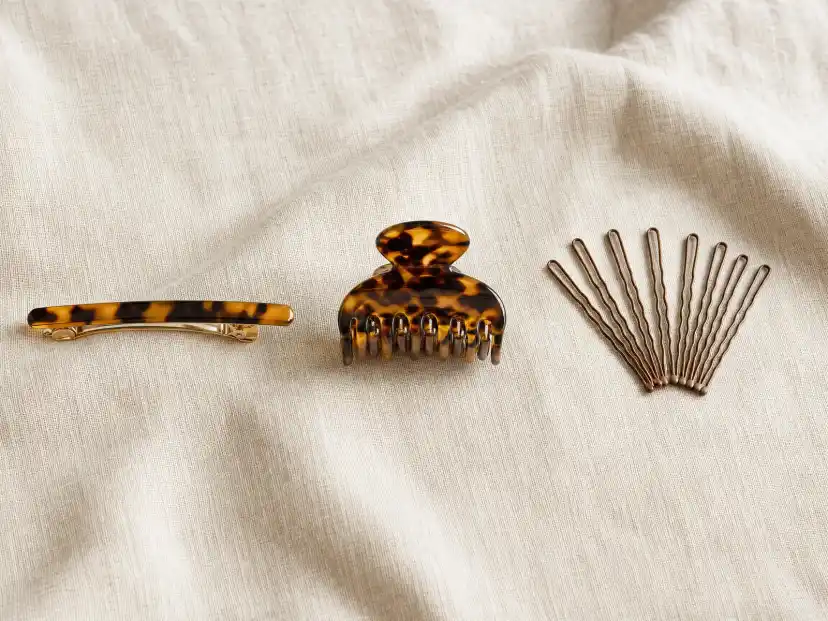
Three barrette shapes cover all 10 looks in this guide:
- A spring-loaded French barrette, around 3 inches. The internal spring is what lets it carry a full half-up section or a twist. The Amariver Vintage French Barrette Clips are the shape we reach for in the elegant looks below.
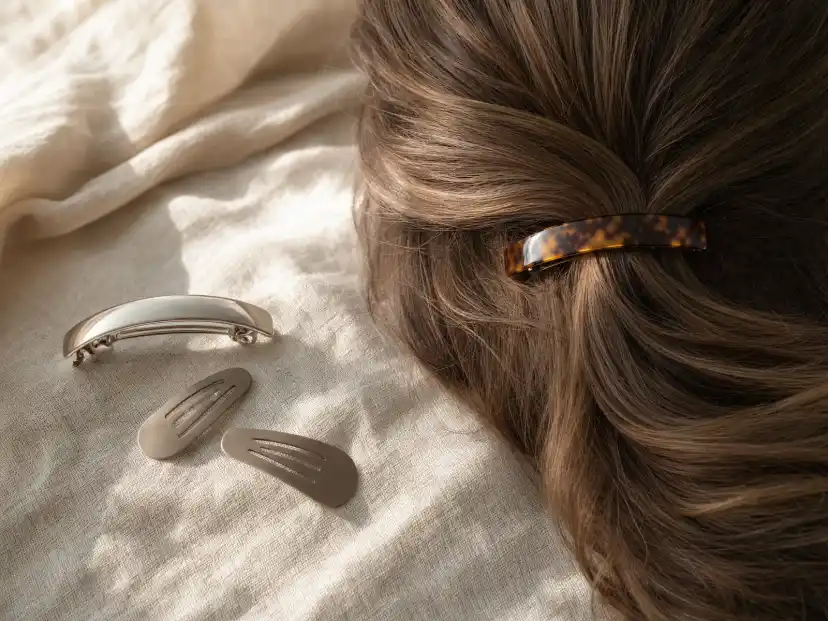
- A slide-in flat metal barrette. No spring to fight, a gentle grip, and the fastest to place one-handed. The Goody Stay Tight Hair Barrettes are the everyday workhorse of this list.
- A decorative acetate barrette. For the looks where the clip itself is the point. An assorted set like the DF DUALFERV Acetate French Tortoise Barrettes gives you eight patterns to rotate through.
If you would rather drill the basic placements before attempting full hairstyles, our companion guide of 12 easy ways to wear barrettes breaks the individual motions down one at a time. Otherwise, start at look one.
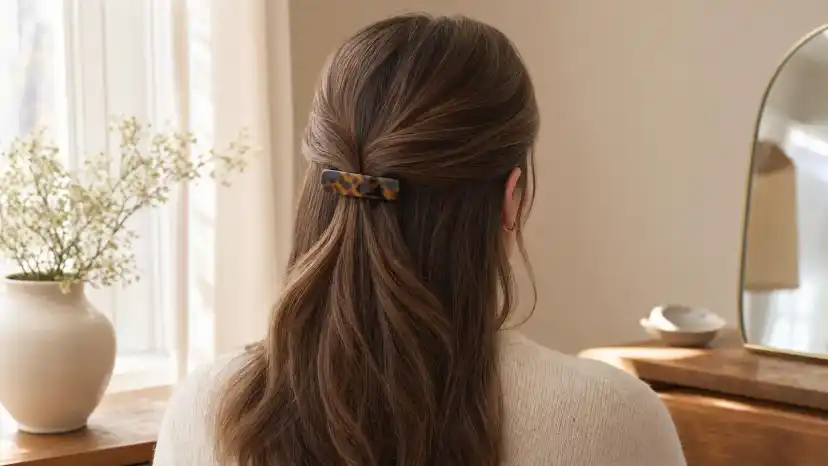
1. The 30-second office half-up
The fastest route from "just woke up" to deliberately styled.
- Gather the hair between your temples, as if starting a half ponytail.
- Twist the section a quarter turn to compress it.
- Clip a French barrette horizontally at the crown, press it flat, and tug once to test the hold.
Best for: medium to long hair, any texture. Barrette: a 3-inch spring French barrette. The mistake: grabbing too much hair. If the clasp strains to close, thin the section — a straining spring pops open by lunchtime. Over day-two texture this holds through a full workday; on freshly washed hair, mist the roots with dry shampoo first.
2. The side sweep for second-day hair
This one actually improves on unwashed hair, because day-two texture gives the clip more to grip.
- Part your hair deep on one side.
- Sweep the heavier section back and behind your ear.
- Slide a flat barrette in just behind the ear, angled slightly downward, and snap it shut.
Best for: every length from a bob to waist-length hair. Barrette: a slide-in metal style like the Goody Stay Tight. The mistake: clipping at the temple, where the head curves sharply — the barrette tents up and works loose. Behind the ear, the skull is flatter and the clip sits flush.
3. Double barrettes along the part
According to L'Oreal Paris, placing two smaller barrettes side by side is an easy way to amp up a simple barrette look, and it is entirely wearable for a workday.
- Take a 1-inch section on one side, about two finger-widths from your part.
- Sweep it straight back and clip the first barrette.
- Place the second barrette parallel to the first, roughly half an inch behind it.
Best for: straight to wavy hair; on fine hair the doubled clips add visual density. Barrette: a matching pair — two tortoise patterns from the DF DUALFERV set read as intentional. The mistake: uneven spacing. The parallel geometry is the whole look, so line the clips up before you snap the second one shut.
4. The French twist barrette updo
The classic barrette updo, and easier than it looks. Who What Wear's Paris Fashion Week coverage calls a simple hair barrette a chic way to elevate an updo with minimal effort — this is that move at home.
- Gather all your hair at the nape, as if making a low ponytail.
- Twist the tail upward until it folds against the back of your head.
- Tuck the ends under the roll, then clip a French barrette vertically along the seam.
Best for: shoulder-length to mid-back hair; very thick hair may need a second clip lower on the seam. Barrette: your strongest spring clasp — this is where the Amariver crossover shape earns its slot. The mistake: twisting too tight, which creates lumps. A slightly loose twist smooths itself when you clip it. For a deeper walkthrough of this exact silhouette, see how to style your hair with a classic French barrette.
5. The no-elastic low chignon
A dinner-ready bun with no hair tie anywhere. According to MOB Professional, elastics can feed a cycle of breakage, and clips and claws are a gentler alternative for sweeping hair back — which makes this a good rotation style if you wear a bun most days.
- Twist all your hair loosely toward the nape.
- Coil the twist into a flat bun against your head.
- Clip one barrette across the top edge of the coil and a second across the bottom edge.
Best for: long hair; fine-haired readers who hate elastic creases get the most out of it. Barrette: two sturdy French barrettes — our roundup of the best French barrettes covers which clasps hold a full coil. The mistake: using a single clip in the middle. The ends of the coil unwind by mid-evening; two clips share the load.
6. Symmetrical face-framers
A middle part with one barrette on each side reads polished in a way a single clip does not. There is a bonus for thin hair here, too: gathering a small section from each side and clipping it back lifts the crown slightly, which can make fine hair look fuller.
- Part your hair down the middle.
- On each side, pick up a 1-inch section just above the ear.
- Sweep both sections straight back and clip them at the same height.
Best for: growing-out layers and curtain bangs, any texture. Barrette: a small matching pair, snap or acetate. The mistake: mismatched heights. Use the tops of your ears as a level line — even half an inch of difference is visible from behind.
7. The tucked bob
Most of wearing barrettes with short hair comes down to this one asymmetric trick.
- Tuck one side of your hair behind your ear.
- Clip a 1-inch section flat at ear level to hold the tuck.
- Leave the other side loose so the finished look is deliberately lopsided.
Best for: chin-length bobs through shoulder-length lobs. Barrette: a slide-in bar or a 2-inch snap clip — small enough to hold only what you give it. The mistake: clipping half the side of your head. A short-hair section balloons over a clip when it is too thick; one inch of hair is plenty.
8. The dressed-up ponytail
The fastest gym-to-dinner conversion we know.
- Make your normal low or mid-height ponytail with an elastic.
- Clip a decorative barrette horizontally directly over the elastic.
- Make sure the clasp bites into the ponytail base, not just the surface strands.
Best for: any hair long enough to tie back. Barrette: the prettiest acetate piece you own — this is the DF DUALFERV set's moment. The mistake: clipping only the loose hair around the elastic. If the barrette does not catch the anchored hair underneath, it slides down the tail within the hour.
9. The braided accent
A weekend look that works especially well on curly and textured hair, where the braid adds structure the clip can grab.
- Loosely braid a 1-inch face-framing section, starting near your part.
- Guide the braid back along the side of your head.
- Pin the tail underneath the loose hair with a small barrette so the braid shows and the clip hides.
Best for: wavy, curly, and coily textures; medium length and up. Barrette: a 2-inch snap clip in a shade close to your hair color. The mistake: braiding tight at the hairline, which can pull uncomfortably at fine front strands — keep the first crossover relaxed.
10. The slicked-back statement
The evening look, and the one place a bold barrette belongs. According to Who What Wear, L.A. hairstylist Hayley Heckmann says hair accessories are following jewelry trends, with sharp geometric barrettes taking over from dainty crystal clips — this style is where that one striking piece goes.
- On dry or nearly dry hair, brush a small amount of gel through the top.
- Smooth everything straight back with a fine-tooth comb.
- Clip one statement barrette horizontally where the back of your head begins to curve inward.
Best for: chin-length and longer, straight or blown-out smooth. Barrette: one large metal or geometric piece, worn alone. The mistake: over-gelling the clip zone. A clasp cannot grip product-slicked strands, so keep the gel light where the barrette sits.
How to make easy barrette hairstyles stay put
Four fixes cover nearly every slipping, sliding, or popped-open barrette:
- Style dry hair. According to celebrity stylist Marcos Diaz, speaking to Parade, wet hair is at its most fragile — the cuticle swells with water, leaving strands more prone to stretching and breakage. Dry hair is both safer and grippier.
- Add friction. According to LoveHairstyles, sliding a bobby pin just beneath where the barrette will sit, plus a mist of texture spray, helps the clip stay in place all day.
- Size up for weight. According to accessories retailer Paris Mode, medium to thick hair calls for larger barrettes with a stronger clasp, and longer hair requires a larger, stronger barrette than short hair.
- Match the clasp to your texture. If your hair is slippery or baby-fine no matter what you do, the clasp design itself is the fix — we tested the options in our guide to the best barrettes for fine hair.
Which barrette hairstyle should you try first?
Start with the 30-second half-up. It teaches the core motion — section, twist, clip flat — that every other look on this list reuses, and it is forgiving enough to redo at your desk. Once it feels automatic, add the French twist for occasions and the double-barrette part line for ordinary Tuesdays, and you have a full week of styles from two or three clips.
The barrette itself matters less than the match between clasp and section — small clips for accent pieces, spring clasps for real weight. When you are ready to build out a small kit, our full guide to choosing and wearing hair barrettes walks through materials, sizing, and which shapes are worth owning. Pick one look, do it three mornings in a row, and it stops being a hairstyle you attempt and becomes one you simply have.
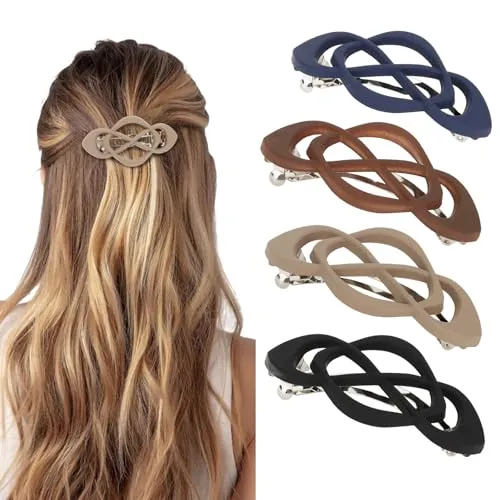
Amariver Vintage French Barrette Clips (4 Pack)
A four-pack of matte-coated French barrettes with a crossover shape and internal metal spring. At roughly 3.
“The vintage crossover shape elevates a plain half-up into something that looks styled, and the matte...”
We tested dozens of claw clips to find the very best options. Below you'll find our complete ranking, with detailed reviews and real customer feedback for each pick.
The Complete Ranking
Amariver Vintage French Barrette Clips (4 Pack)
“The vintage crossover shape elevates a plain half-up into so...” — Verified Buyer
A four-pack of matte-coated French barrettes with a crossover shape and internal metal spring. At roughly 3.2 inches they hold a half-up section or a low twist, and the neutral colorways read as polished rather than flashy.
“The vintage crossover shape elevates a plain half-up into something that looks styled, and the matte finish goes with everything.”
— Verified Buyer
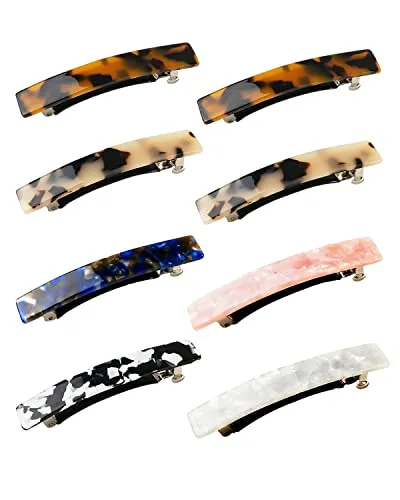
DF DUALFERV Acetate French Tortoise Barrettes (8 Pcs)
“Reviewers call out the quality acetate look and a comfortabl...” — Verified Buyer
An eight-piece set of 3-inch acetate rectangle barrettes with a tooth-shaped grip and metal spring. Eight distinct tortoiseshell patterns give you options for every look in this guide, and the tooth design bites in without a heavy clamp.
“Reviewers call out the quality acetate look and a comfortable grip that stays put without pinching.”
— Verified Buyer
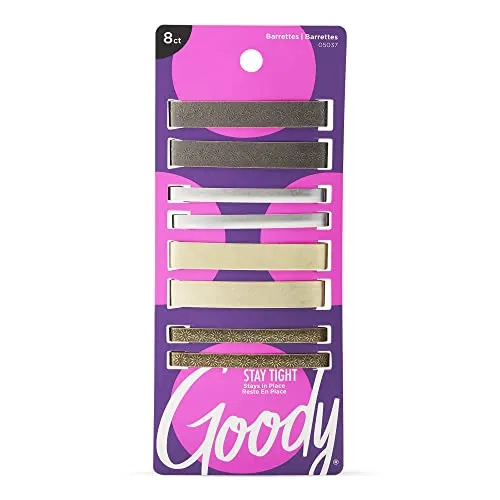
Goody Stay Tight Hair Barrettes (8 Ct)
“Reviewers consistently praise the secure hold and how easily...” — Verified Buyer
Non-slip flat metal barrettes in assorted metallic finishes. The slide-in design grips securely without snagging, and the gentle hold suits both thick and thin hair. A versatile, low-cost everyday workhorse.
“Reviewers consistently praise the secure hold and how easily they slide in for quick everyday styling.”
— Verified Buyer
The vintage crossover shape elevates a plain half-up into something that looks styled, and the matte finish goes with everything.
Quick Comparison
A side-by-side look at our top picks
Frequently Asked Questions
Three clasps, three jobs
Style on dry hair
Texture is free grip

Donna Miller
Enjoyed This Guide?
Get more hair tips and product recommendations delivered weekly.